
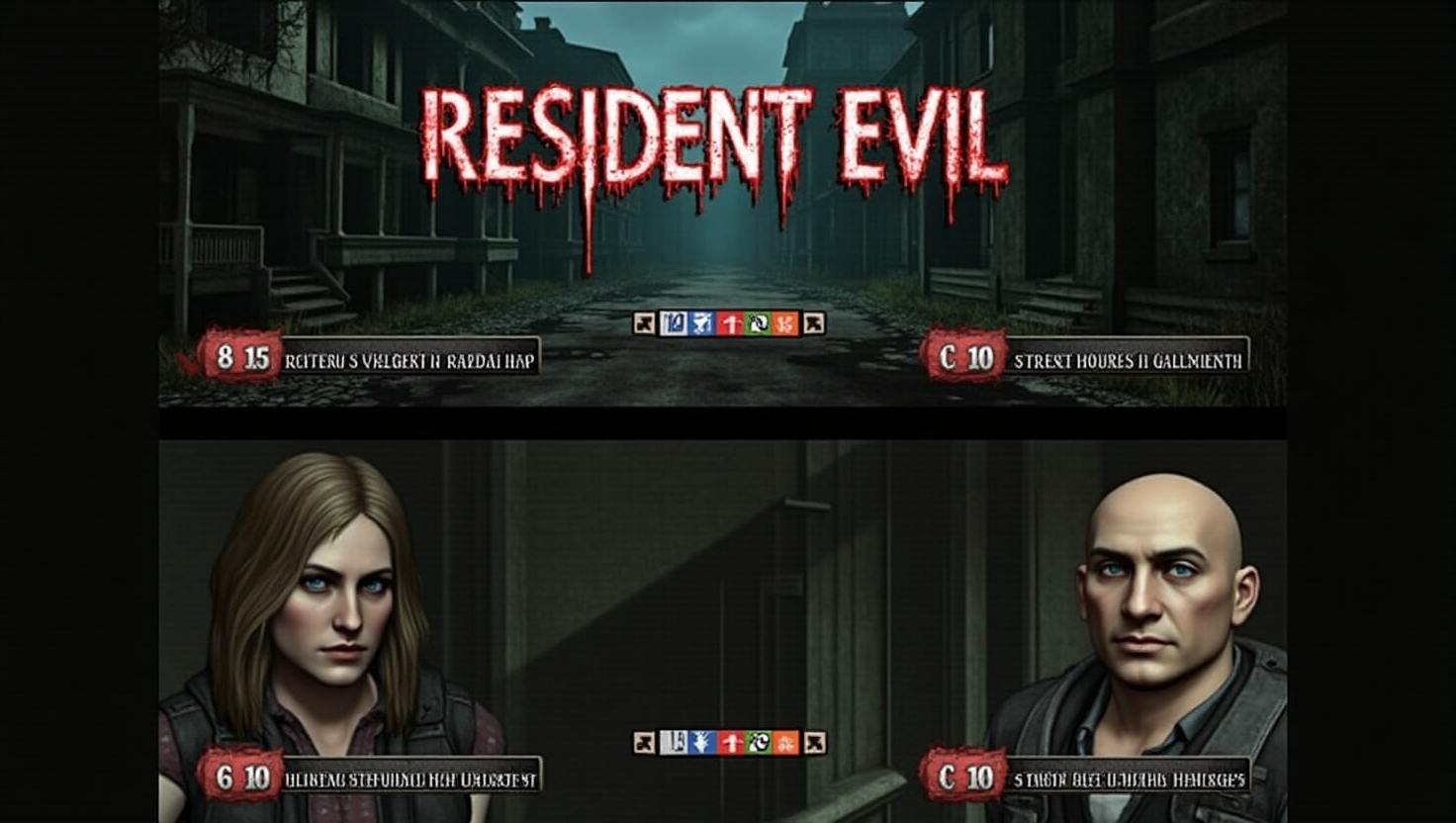
The Best Survival Horror Games: A Dive into Fear and Strategy
Survival horror games stand out in the vast landscape of the video game industry, weaving fear and strategy into a finely crafted fabric that both terrifies and captivates players. This blog post ventures into the essential components that define survival horror, its iconic entries, and the evolution of this spine-chilling genre, while forecasting its future in gaming.
Understanding the Survival Horror Genre
Survival horror games are a unique fusion of suspense, terror, and strategy, distinguishing themselves from action-packed hypes through a more profound psychological engagement. Unlike traditional horror games focused merely on jump scares, survival horror emphasizes resource management, maze-like environments, and the looming pressure from relentless enemies. Imagine being trapped in a dimly lit, labyrinthine asylum with a dwindling flashlight battery—each step forward could spell doom, yet retreat is not an option.
These games create an asymmetric power dynamic where the enemies hold the upper hand, forcing players to use wit and scarce resources over brute strength. According to an IGN article, the essence of survival horror lies in the combination of “a power dynamic in favor of the enemy, maze-like environments, resource management, and relentless pressure from pursuers.”[^1]
Key Characteristics of Iconic Horror Games
The elements that make a survival horror game iconic include a rich narrative, atmospheric design, intricate enemy dynamics, and immersive player psychology. Games like Resident Evil and Silent Hill are torchbearers in this regard. Resident Evil masterfully balances action with terror, setting new standards for the genre. In contrast, Silent Hill offers an unsettling psychological horror that digs deep into the human psyche.
Atmosphere plays a critical role, with sound and light design used to heighten tension. The feeling of dread stems not just from what is visible but what lies hidden in the shadows. Narrative depth, often involving personal or existential themes, adds layers to the fear, much like a good horror novel keeps its readers up at night, pondering the unfolding dread with bated breath.
Ranking the Top Survival Horror Games
The survival horror genre has seen a myriad of entries, but few have managed to leave a lasting impact. Here’s a list of the best survival horror games, celebrated for their innovation and terrifying experience:
– Resident Evil: This is the benchmark for survival horror, setting genre standards with its release and evolution.
– Silent Hill: A deep psychological horror that remains a significant touchstone in gaming circles.
– Alien: Isolation: Offers a palpable tension akin to being hunted continuously, raising the bar for fear.
– Amnesia: The Dark Descent: Revolutionized horror by focusing on vulnerability over combat prowess.
– Alan Wake 2: Brings a narrative richness and modern gameplay mechanics that evolve the genre.
– Outlast: Leverages its atmosphere to create a harrowing experience without overwhelming with combat.
– Resident Evil 7: Biohazard: Reinvents the classic series with a first-person perspective that reinvigorates traditional themes.
– Silent Hill 2: A nuanced exploration of fear and human emotion, praised for its narrative depth.
– Resident Evil 2 (Remake): A standout for its faithful yet innovative recreation, encapsulating the essence of survival horror beautifully.
Essential Gameplay Mechanics in Survival Horror
Survival horror thrives on specific gameplay mechanics: limited combat options, intricate inventory systems, and layered environmental storytelling. These components work in tandem to augment tension and player engagement. Combat limitations, for instance, force players to choose flight over fight at critical junctures, maintaining a constant edge-of-the-seat experience.
Inventory management adds another strategic layer, often becoming a mini-game in itself as players must prioritize survival essentials under constraints. Environmental storytelling further immerses players, using surroundings to hint at broader narratives or impending threats. It’s a delicate dance akin to piecing together a jigsaw puzzle only under the stress of time and lurking danger.
Evolution of Survival Horror Games Over the Years
The survival horror genre has witnessed profound evolution, ushered by the advancing technology and shifting player expectations. What once began with pixelated graphics and simple mechanics now includes photorealistic environments and VR compatibility, profoundly elevating player immersion.
As the IGN report elaborates, many games today blur lines, integrating smoother action gameplay yet retaining the intricate fear mechanics characteristic of classic survival horror[^1]. The genre has adapted to evolving platforms—PC, consoles, and VR—demonstrating flexibility and enduring appeal.
Notable Quotes About Survival Horror
The gaming community brims with discussions on survival horror’s allure. As one critic opines, \”‘Many games are often labelled survival horror, but lean much too heavily into action to be truly considered a genuine example of the genre’\”[^1]. Such perspectives underscore the necessity for maintaining genre purity even amid evolving gaming paradigms. These sentiments affirm the balance between fear and strategy that has come to define the essence of survival horror.
Conclusion
In conclusion, the future of survival horror games hinges on balancing tradition with innovation. As developers push the boundaries of immersive technology and narrative depth, the genre continues to offer fresh, terrifying experiences. The foundation laid by iconic titles will serve as both a guide and a challenge for future games, ensuring survival horror remains a cherished and pivotal part of the gaming landscape.
For those interested in exploring more survival horror gems and their impactful contributions, refer to comprehensive guides and reviews, such as the full article on IGN[^1].
^1]: [https://www.ign.com/articles/the-best-survival-horror-games