
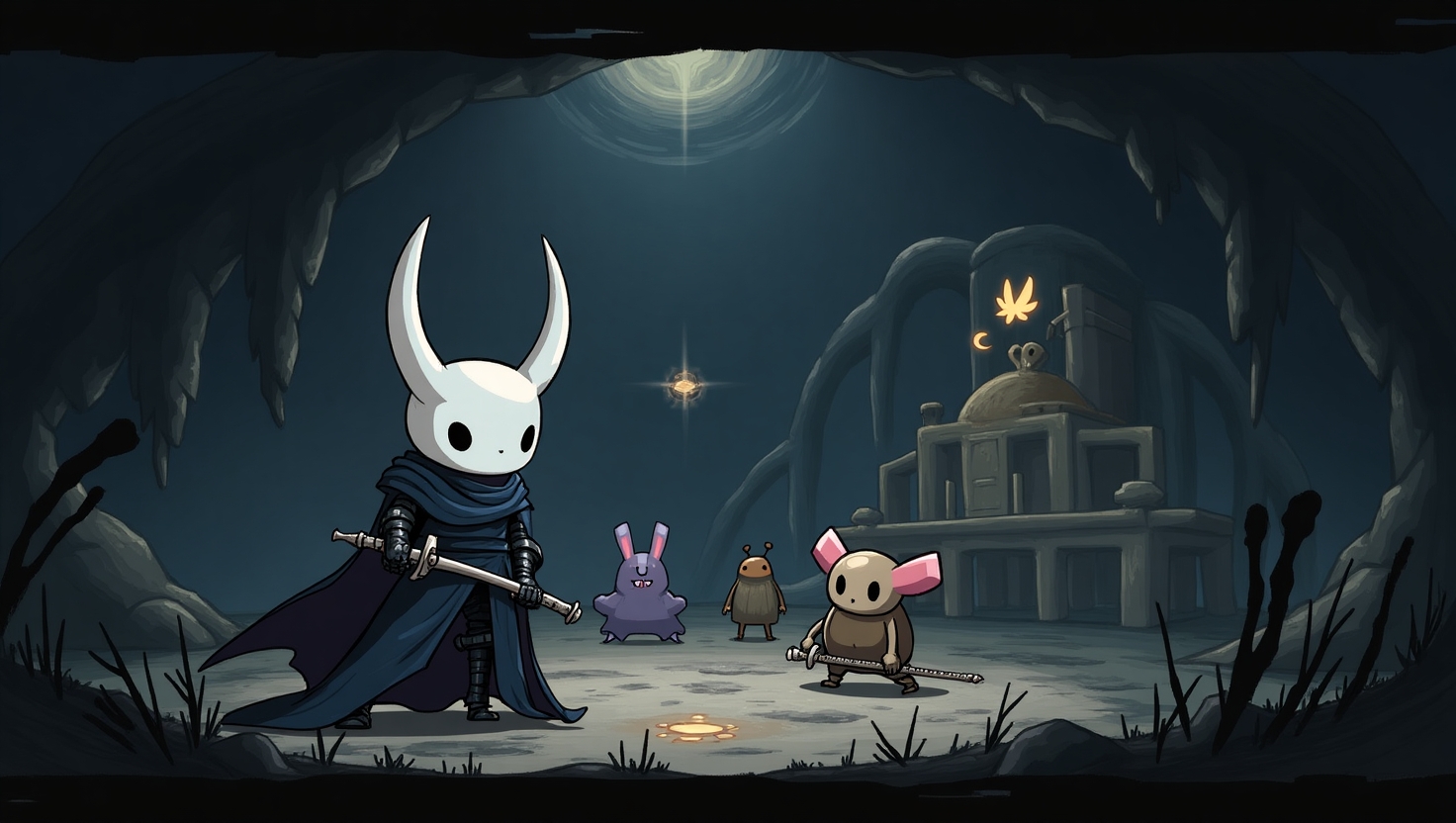
Hollow Knight Steam Popularity: A Deep Dive into the Game’s Trend and Player Engagement
Introduction
Hollow Knight, an indie gem created by Team Cherry, has enjoyed immense success on the Steam platform since its debut. Seamlessly blending challenging gameplay with enchanting artistry, it has captivated a global audience, establishing itself as a staple in the realm of indie games. Team Cherry’s masterful execution has paved the way for this success, utilizing an approach that balances compelling narrative with robust community interaction. In this article, we will explore the factors contributing to the Hollow Knight Steam popularity, dissecting player engagement metrics and contemporary game trends.
The Rise of Hollow Knight: Steam’s Favorite Indie Game
Since its initial release, Hollow Knight has carved its niche in the gaming landscape. Launched to much critical acclaim, it received accolades for its metroidvania-inspired design and intricate storytelling. The game features hand-drawn visuals accompanied by a hauntingly beautiful soundtrack, ensuring an immersive player experience.
Player engagement statistics reveal a loyal community, with numerous Hollow Knight players consistently reconnecting with the game. This community spirit is emblematic of passionate engagement. The game’s lasting popularity on Steam can be attributed to several factors:
– Community Involvement: Team Cherry actively involves players in development, fostering a sense of ownership and community.
– Content Updates: Regular patches and expansions, like the widely anticipated Silksong, contribute to renewed interest.
With its rich lore and challenging yet rewarding gameplay, Hollow Knight remains a fan favorite, demonstrating staying power that is both impressive and rare among indie titles.
Recent Trends in Game Popularity
Current game trends emphasize prolonged engagement over fleeting virality. Steam’s ecosystem, focusing on active player engagement, is a testament to this approach. Games that thrive on this platform often possess dynamic systems for user feedback, a quality that Hollow Knight embodies.
Success is gauged through metrics like average playtime and concurrent user counts. In Hollow Knight’s case, the emphasis on community feedback has not only led to improved gameplay but also informed strategic decisions like adjustments in game balance and translation quality (as detailed in IGN’s article).
An example of community influence is the game’s patch 1.0.28891, where feedback led to crucial adjustments—highlighting improvements in Simplified Chinese translation and other mechanical tweaks such as Fine Pins drop rates.
Team Cherry’s Role in Sustaining Engagement
Team Cherry stands as a paragon of player-centric development, making deliberate efforts to harness feedback and refine Hollow Knight continuously. Their proactive stance is evident through frequent updates and community support, as seen in the recent patch which fine-tunes game mechanics and prioritizes language updates IGN.
Significantly, this level of engagement mirrors that of a chef constantly tasting and refining their dish, ensuring each note is precisely balanced to maintain intrigue and interest from patrons—an analogy apt for Team Cherry’s diligence.
Conclusion: What’s Next for Hollow Knight?
Looking ahead, the anticipation around future content from Team Cherry continues to grow. The community eagerly awaits expansions, which promise to further enrich gameplay and extend the narrative depth. Maintaining a firm grasp on player engagement will be critical, as will the ability to adapt to emerging game trends.
To our readers, we pose a question: How do you foresee the path of Hollow Knight unfolding on Steam? Share your journeys and insights below, for it is this collective wisdom that has fueled Hollow Knight’s enduring popularity. As Team Cherry moves forward, their roadmap will likely be shaped by the fervent engagement of a dedicated fanbase, ensuring Hollow Knight’s lore—and allure—continues to thrive.